


PDF
2.35
MB

Ultra-Low NOx Measurement: Why Accuracy Matters
Learn how ultra-low NOx requirements are reshaping heavy-duty engine testing and driving the need for highly accurate, repeatable emissions measurement.

Heavy-duty engine manufacturers face increasing pressure to reduce emissions while maintaining performance, efficiency, and durability. Evolving global regulations for ultra-low NOx, greenhouse gases (GHG), onboard diagnostics (OBD), and alternative fuels require testing programs that deliver accurate, reliable, and repeatable data.
HORIBA provides integrated heavy-duty engine testing solutions that combine emissions measurement, dynamometer systems, laboratory automation, and engineering expertise. From commercial vehicle engines to construction, agricultural, and off-road equipment, our technologies support development, calibration, certification, and compliance testing across conventional and emerging powertrain platforms.
Whether validating diesel, hybrid, natural gas, or hydrogen (H2) engines, HORIBA helps manufacturers accelerate development, improve laboratory efficiency, and prepare for future emissions requirements.
Explore the key stages of heavy-duty engine testing, from dynamometer evaluation and emissions measurement to laboratory automation and real-world validation.
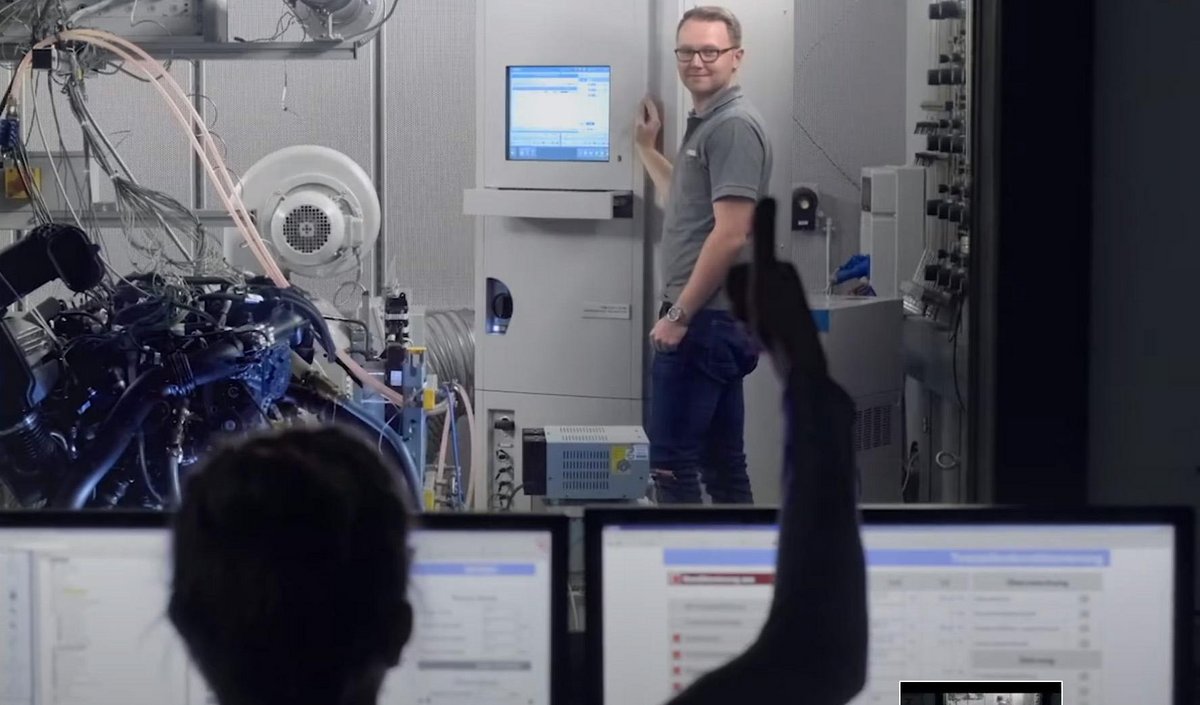
Heavy-duty engines are typically installed on an engine dynamometer, allowing engineers to simulate real-world operating conditions in a controlled laboratory environment.
Dynamometer systems apply precise loads to the engine while measuring torque, power, fuel consumption, efficiency, and durability across a wide range of operating points.
HORIBA dynamometer systems are designed for flexibility and future readiness, supporting conventional diesel engines alongside hybrid and hydrogen-powered platforms. Our configurable solutions help manufacturers maximize test cell utilization while delivering accurate, repeatable, and reliable results.
This controlled approach enables engineers to evaluate engine performance, optimize calibration strategies, validate designs, and prepare engines for certification and production while supporting the industry's transition to next-generation propulsion technologies.
During testing, exhaust gases are continuously sampled and analyzed to quantify regulated and emerging emissions. Modern heavy-duty development programs must address increasingly stringent requirements for ultra-low NOx, greenhouse gases (CO2, CH4, and N2O), particulate matter (PM), particle number (PN), ammonia (NH3), and onboard diagnostics (OBD).
Accurate emissions measurement helps engineers understand combustion behavior, evaluate aftertreatment performance, and demonstrate compliance with evolving global regulations.
Typical Measurements: NOx, CO2, CH4, N2O, NH3,PM & PN, and OBD validation.
Heavy-duty engine testing generates significant amounts of data across multiple systems. Test cell and laboratory automation software integrates dynamometers, emissions analyzers, conditioning systems, and data acquisition platforms into a single testing environment.
Automated test execution improves repeatability, reduces operator workload, standardizes testing procedures, and helps laboratories maximize efficiency while maintaining data quality and traceability.
Benefits: Automated test cycles, centralized data management, improved repeatability, faster reporting, increased laboratory utilization.
As emissions regulations increasingly emphasize real-world performance, laboratory testing is often complemented by on-road and in-use validation.
Portable Emissions Measurement Systems (PEMS) allow engineers to measure emissions directly from vehicles operating under actual driving and working conditions.
PEMS testing helps manufacturers verify compliance, validate laboratory results, and understand how engines perform across a wide range of environments, payloads, routes, and duty cycles.
Contact HORIBA to discuss your vehicle development and testing challenges.
Successful heavy-duty engine testing depends on balancing performance, fuel consumption, durability, emissions, and regulatory compliance. As heavy-duty powertrains evolve, manufacturers must meet increasingly complex requirements while reducing development time and risk.
HORIBA supports heavy-duty engine development and testing programs with scalable solutions that provide accurate measurement data throughout the development lifecycle. Our technologies help engineers optimize calibration, validate aftertreatment systems, and prepare engines for certification and production.
For a broader look at trends impacting commercial vehicles and off-highway equipment, explore our Heavy-Duty Vehicles industry page.
Global emissions legislation continues to become more stringent, driving demand for improved measurement accuracy and expanded testing requirements. Manufacturers must address ultra-low NOx targets, greenhouse gas emissions, particulate measurement, and OBD compliance while maintaining engine performance and efficiency. In Europe, evolving CO2 emission standards for heavy-duty vehicles are accelerating the development of cleaner and more efficient commercial transportation solutions.
HORIBA has supported engine emissions measurement since the introduction of the first MEXA analyzer in 1964. Today, our portfolio helps manufacturers confidently measure regulated and emerging emissions species throughout development, certification, and compliance testing programs.
HORIBA also supports real-world and in-use emissions measurement programs for heavy-duty applications.
Engine testing is only part of the process. HORIBA also provides heavy-duty chassis testing for complete vehicle validation.
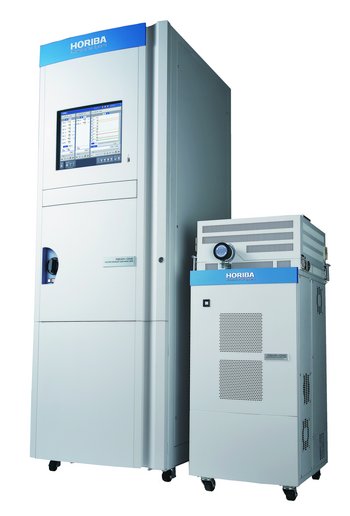
Motor Exhaust Gas Analyzer
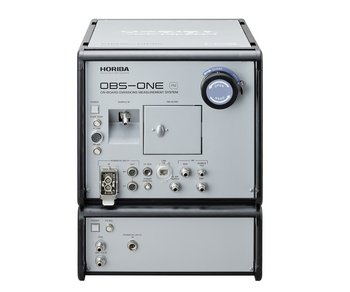
On-board Emissions Measurement System
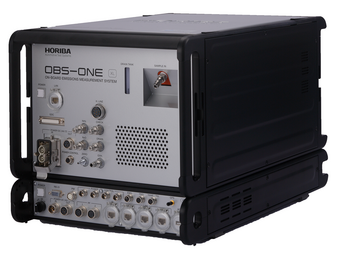
On-board NH3/N2O Measurement System for real-world driving
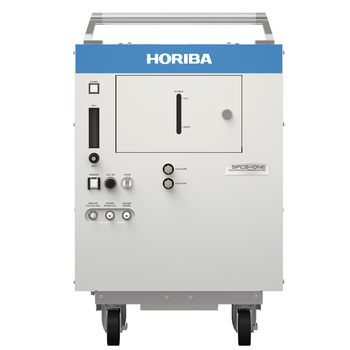
Solid Particle Counting System
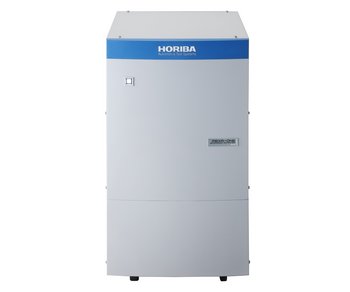
Laser Spectroscopic Motor Exhaust Gas Analyzer
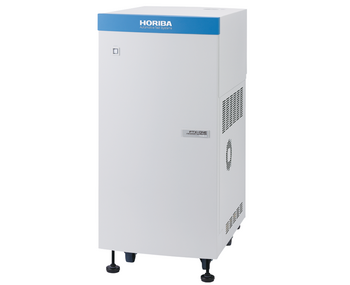
FTIR Exhaust Gas Analyzer Direct Measurement Type
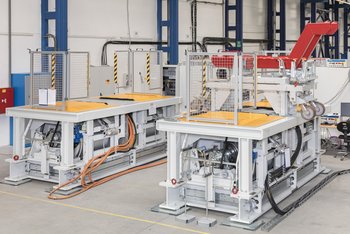
Chassis Dynamometers

Test Automation Software for Heavy-Duty Engine Emission Testing
Explore solutions for light-duty engine development, emissions measurement, and certification testing.
Explore solutions for NRMM engine development, emissions measurement, and certification testing.
Heavy-duty engine testing evaluates performance, durability, fuel consumption, emissions, and compliance requirements for commercial vehicles, construction equipment, agricultural machinery, and other off-highway applications.
Engine testing evaluates the engine independently, while chassis testing evaluates the complete vehicle and integrated powertrain under simulated operating conditions.
Accurate emissions measurement helps manufacturers meet increasingly stringent requirements for ultra-low NOx, greenhouse gases, particulate emissions, and OBD compliance while optimizing diesel engine performance, fuel efficiency, and overall vehicle operating costs.
Do you have any questions or requests? Use this form to contact our specialists.